On This Page
- What Is a NICU?
- When Does a Newborn Need NICU Care?
- Common Reasons
- What Happens During Admission
- Common NICU Treatments
- Does Every Premature Baby Need NICU?
- How Long Does a Baby Stay?
- Parents' Role in NICU Care
- Breastfeeding and Feeding Support
- Before NICU Discharge
- After NICU Discharge
- Warning Signs After Discharge
- NICU Care in Tirunelveli
- FAQs
A newborn may need NICU care when they require closer monitoring, specialized support, or treatment that cannot be safely provided in a routine newborn-care setting. Common reasons include premature birth, breathing difficulties, low birth weight, difficulty maintaining body temperature, feeding difficulties, low blood glucose, suspected or confirmed infection, significant jaundice, and complications around birth. NICU admission depends on the baby's gestational age, condition, symptoms, medical history and clinical assessment. Not every premature or low-birth-weight baby automatically needs NICU admission — the decision is individualised by the healthcare team.
- NICU provides specialized care and continuous monitoring for newborns who need additional support.
- Premature babies may need NICU care, but not every premature baby requires intensive care.
- Breathing problems are one of the important reasons newborns may need NICU support.
- Feeding, temperature regulation, blood glucose and infection concerns can also require closer monitoring.
- NICU treatment depends on the baby's individual condition.
- Parents can often participate in feeding, comforting and other aspects of care when medically appropriate.
- NICU discharge depends on clinical readiness rather than simply a fixed number of days.
Introduction
Bringing a new baby into the world is a time of joy and anticipation. For some families, it also brings unexpected challenges — and one of the most difficult moments can be learning that your newborn needs care in the Neonatal Intensive Care Unit (NICU).
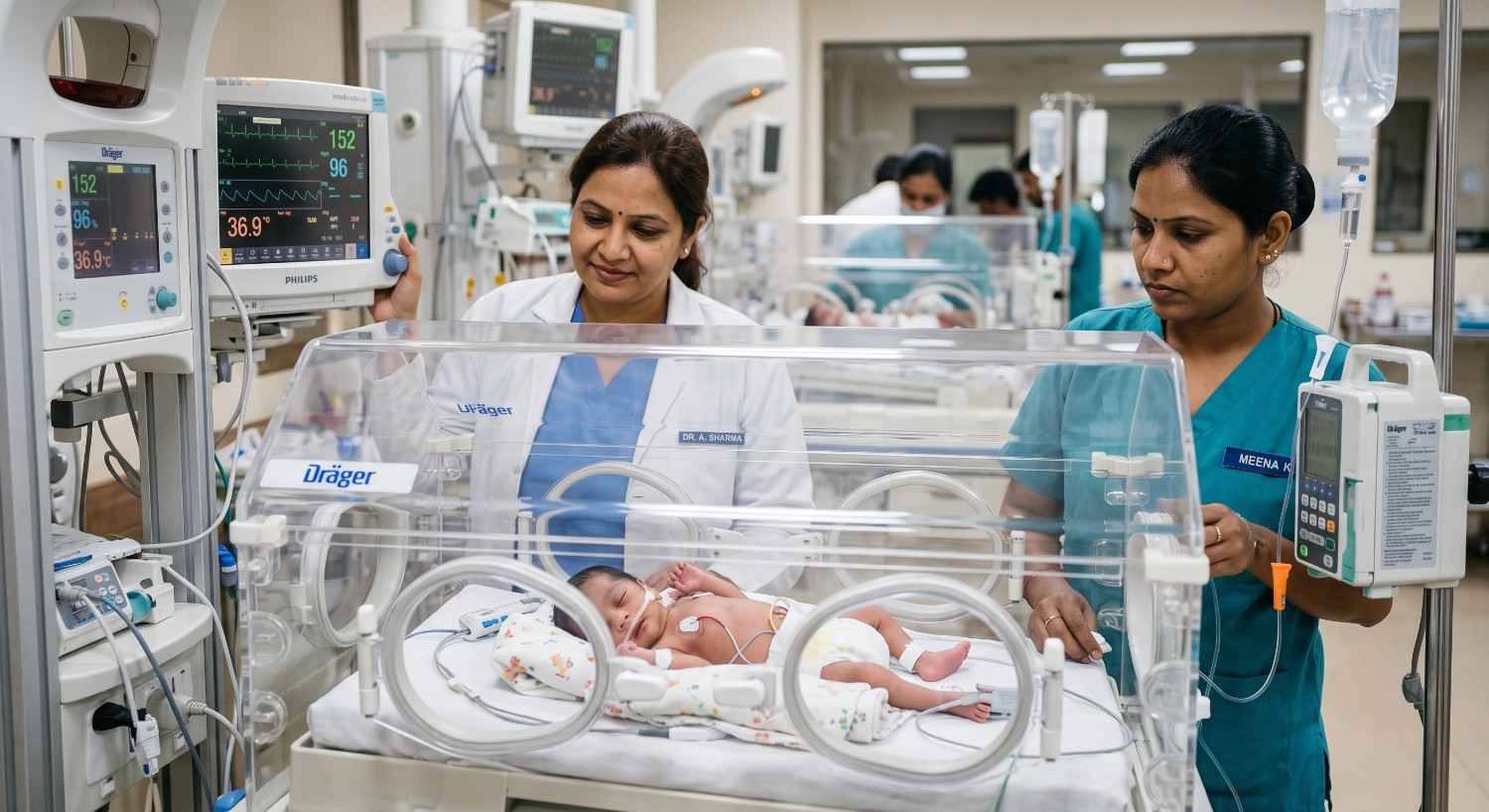
The NICU is a specialized unit designed for newborn babies who require closer monitoring, breathing support, feeding assistance, temperature regulation, or treatment for a medical concern. It is staffed by neonatal healthcare professionals and equipped with monitoring technology and specialized equipment suited to the needs of fragile newborns.
It is important to understand that NICU admission does not necessarily mean a baby has a permanent or life-threatening condition. Many babies are admitted for temporary monitoring or support — for example, for breathing assistance, feeding support, temperature regulation, or treatment of an infection — and go on to do well. The reason for admission and the baby's response to care are what matter most.
This guide is educational and does not replace individual medical advice. Every baby is different, and your baby's care team can explain the specific situation and what it means for your family. Parents looking for related context may also find our articles on newborn baby care during the first 100 days and pregnancy care in Tirunelveli useful.
What Is a NICU?
NICU stands for Neonatal Intensive Care Unit. It is a specialized hospital unit designed specifically for newborn babies who require a higher level of medical care than a routine newborn nursery can provide. The NICU provides continuous or frequent monitoring, specialized neonatal healthcare professionals, respiratory support, feeding support, temperature management, and medication or supportive treatment when required.
Routine newborn care focuses on healthy newborns who are feeding well, maintaining their temperature, and breathing normally. NICU care is designed for babies who need additional support in one or more of these areas.
| Routine Newborn Care | NICU Care |
|---|---|
| Healthy newborn monitoring | Higher level monitoring and support |
| Routine feeding | Specialized feeding support when needed |
| Routine observation | Continuous or frequent monitoring |
| Standard postnatal care | Specialized neonatal treatment |
Actual care varies according to the baby's condition. Not every baby in the NICU requires every type of support.
When Does a Newborn Need NICU Care?
A newborn may need NICU care when they require closer monitoring, specialized support, or treatment that cannot be safely provided in a routine newborn-care setting. The decision is based on the baby's gestational age, condition, symptoms, medical history and clinical assessment.
Below are the most common reasons a newborn may be admitted to the NICU.
1. Premature Birth
Premature birth — birth before 37 weeks of gestation — is one of the leading reasons for NICU admission. Babies born early may need additional support as their organs continue to develop outside the womb. They may require assistance with breathing because of underdeveloped lungs, help maintaining body temperature, and feeding support until they can suck and swallow effectively on their own. The length of NICU stay and the effect of prematurity varies widely depending on how early the baby is born. Not every premature baby needs NICU care — some babies born just before term may be able to stay with the mother with routine monitoring.
2. Breathing Difficulties
Respiratory problems are common in newborns, particularly those born prematurely. Breathing difficulties may require NICU support for oxygen, respiratory monitoring, or other respiratory support. Common breathing concerns include respiratory distress syndrome, which occurs when the lungs are not fully developed and lack surfactant — a substance that helps keep the air sacs open. Another condition, transient tachypnea of the newborn, is characterized by rapid breathing and usually resolves within a few days as the baby's lungs clear out excess fluid. Babies with breathing difficulties may need close monitoring of oxygen levels and breathing patterns.
3. Low Birth Weight
Some babies with low birth weight may require closer observation or specialized care. Low birth weight can occur in premature babies or in babies who are small for their gestational age. These babies may need support with feeding, temperature regulation, and monitoring for blood sugar stability and other concerns. The level of care depends on the baby's individual condition and clinical assessment.
4. Difficulty Maintaining Body Temperature
Newborns, particularly premature or medically unwell babies, may have difficulty maintaining their body temperature. This is because they have less body fat, immature temperature-regulation mechanisms, and a larger surface area relative to their weight. NICU teams can provide controlled thermal support using incubators or radiant warmers to help the baby maintain a stable body temperature.
5. Feeding Difficulties
Some newborns have difficulty coordinating sucking, swallowing and breathing, which can make feeding challenging. Poor feeding or inability to take enough milk safely may require temporary feeding support in the NICU. This may include feeding through a tube that passes through the nose or mouth into the stomach, or other nutritional support depending on the baby's condition. As the baby becomes stronger and more coordinated, feeding can be transitioned toward oral feeding.
6. Low Blood Glucose
Low blood sugar (hypoglycemia) can be a concern for newborns, especially those who are premature or whose mothers have diabetes or gestational diabetes. Babies with hypoglycemia may need close monitoring and treatment to ensure their blood sugar levels remain stable. Having low blood sugar after birth can be concerning if it goes untreated, as it can make babies jittery and affect feeding, and in severe cases can lead to seizures. The severity and clinical situation determine the level of monitoring and treatment required.
7. Suspected or Confirmed Infection
Newborns are vulnerable to infections, which can sometimes be serious. Infections may stem from exposure before, during or after birth. Babies with suspected or confirmed infection may require closer observation, investigations and treatment. Newborn infection can require NICU care for monitoring, intravenous antibiotics, and supportive treatment as clinically indicated.
8. Significant Jaundice or Other Medical Concerns
Jaundice is a common condition in newborns, characterized by a yellowing of the skin and eyes. It occurs when a high level of bilirubin is in the baby's blood. Most babies with newborn jaundice do not need NICU care. However, some newborns with significant jaundice may require hospital-based monitoring or treatment, such as phototherapy, which helps break down the bilirubin. Other medical concerns identified during or after birth may also require NICU evaluation and monitoring.
9. Complications Around Birth
Some babies may experience complications around the time of birth, such as a difficult transition after delivery, need for respiratory support, or other conditions identified during or shortly after delivery. These babies may require observation and monitoring in the NICU to ensure their condition is stable and to provide any necessary support.
Common Reasons a Newborn May Need NICU Care
The following cards summarise the most common reasons a newborn may be admitted to the NICU.
Prematurity
Babies born before 37 weeks may need support with breathing, feeding and temperature regulation.
Breathing problems
Respiratory distress, rapid breathing, or need for oxygen or breathing support.
Low birth weight
Babies with low birth weight may need closer monitoring and feeding support.
Feeding difficulties
Difficulty coordinating sucking, swallowing and breathing, requiring feeding support.
Temperature instability
Difficulty maintaining body temperature, requiring controlled thermal support.
Low blood glucose
Hypoglycemia may require monitoring and treatment to maintain stable blood sugar levels.
Infection concerns
Suspected or confirmed infection may require closer observation and treatment.
Birth-related complications
Complications during or after delivery that require monitoring and support.
What Happens When a Newborn Is Admitted to the NICU?
When a newborn is admitted to the NICU, the care team follows a structured process to assess the baby's condition and provide appropriate support.
Initial assessment
A rapid review of the baby's condition to identify any immediate concerns.
Monitoring vital signs
Continuous or frequent monitoring of heart rate, breathing, oxygen levels and temperature.
Breathing and oxygen assessment
Checking how well the baby is breathing and whether oxygen support is needed.
Temperature management
Ensuring the baby is kept warm using appropriate thermal support.
Feeding assessment
Evaluating whether the baby can feed safely or needs feeding support.
Blood tests or other investigations
When clinically indicated, tests may be performed to assess blood sugar, infection markers, bilirubin levels or other parameters.
Treatment based on findings
Treatment is guided by the assessment — it may include respiratory support, feeding support, thermal support, medication or other interventions as clinically appropriate.
Ongoing monitoring
Continued monitoring and adjustment of care based on the baby's progress.
Parent communication
Regular updates and explanations to parents about the baby's condition and care plan.
Not every baby requires every test or intervention. The care provided is individualised based on the baby's condition and clinical needs.
What Treatments Are Commonly Used in the NICU?
NICU treatments are designed to support the baby's development and address specific medical concerns. The care provided depends on the baby's individual condition.
Respiratory Support
Oxygen support, respiratory monitoring, or other respiratory support such as CPAP when the baby needs help with breathing.
Feeding Support
Breast milk support, tube feeding when the baby is not yet able to feed orally, or other nutritional support depending on the baby's condition.
Temperature Support
Incubators or radiant warmers to provide a controlled thermal environment and help the baby maintain a stable body temperature.
Continuous Monitoring
Monitoring of heart rate, breathing, oxygen saturation, temperature and other parameters based on the baby's condition.
Medication and Medical Treatment
Medicines or other treatments may be used when clinically indicated, including treatment for infection or other conditions. These are always guided by the clinical team.
Phototherapy
Special light therapy for significant jaundice to help break down bilirubin. Many babies needing phototherapy can be treated in a newborn nursery without NICU admission.
Does Every Premature Baby Need NICU Care?
No. NICU admission is not determined by prematurity alone. A baby born just before term may be able to stay with the mother with routine monitoring, while a baby born much earlier may need intensive support.
The decision depends on several factors:
- Gestational age
- Birth weight
- Breathing ability
- Feeding ability
- Temperature stability
- Blood glucose
- Infection concerns
- Overall clinical condition
- Need for specialized monitoring or support
Your healthcare team assesses these factors and determines what level of care your baby needs.
How Long Does a Baby Stay in the NICU?
There is no single fixed NICU stay for every newborn. The length of stay depends on the baby's individual progress and clinical readiness.
Factors that influence length of stay include:
- Gestational age
- Medical condition
- How much breathing support is needed
- Feeding progress
- Temperature stability
- Weight gain
- Resolution of medical concerns
- Overall clinical readiness
Discharge is generally based on clinical readiness rather than a predetermined number of days. Your baby's care team will provide updates as your baby progresses.
Can Parents Be Involved in NICU Care?
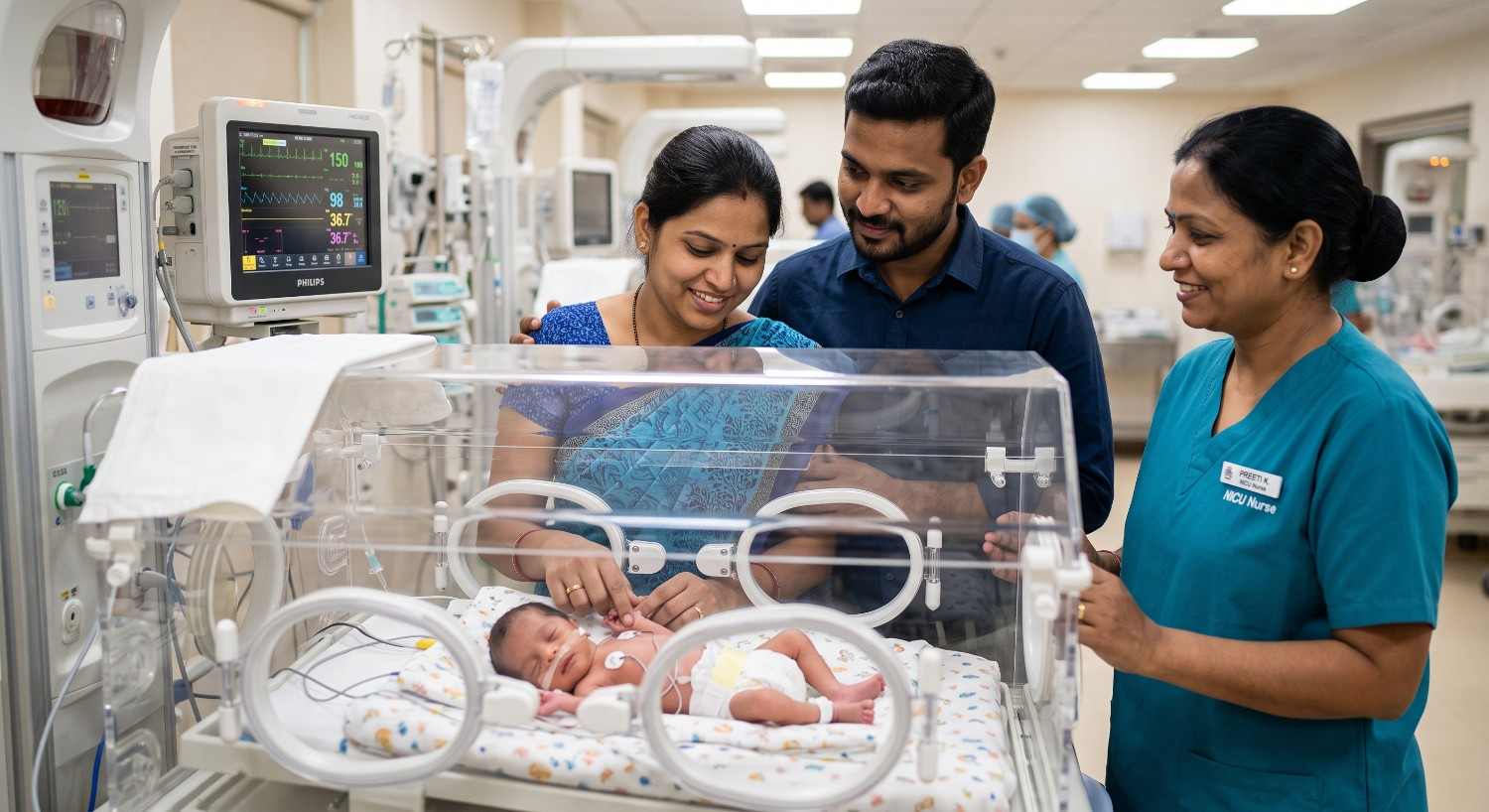
Yes, parents can often be involved in NICU care when it is medically appropriate. Participation depends on the baby's condition and hospital protocols, but many NICUs encourage parent involvement as part of the baby's care.
Ways parents may be involved include:
- Speaking to the baby
- Gentle touching or comforting when permitted
- Kangaroo care (skin-to-skin contact) when the baby is stable enough
- Expressing breast milk and supporting feeding
- Participating in routine care as guided by the neonatal team
- Asking questions and understanding the baby's care plan
Kangaroo care — holding the baby skin-to-skin against a parent's chest — has been shown to support the baby's stability, weight gain and development. The care team will guide you on when and how to participate safely.
Breastfeeding and Feeding Support in the NICU
Breast milk is often supported in the NICU when medically appropriate. Mothers may express breast milk, which can be given to the baby through a feeding tube if the baby is not yet able to feed orally, or by breast or bottle as the baby becomes ready.
Feeding support in the NICU may include:
- Expressing breast milk
- Tube feeding when the baby cannot feed orally yet
- Transition toward oral feeding as the baby develops the coordination to suck, swallow and breathe
- Lactation support from trained professionals
- Parent involvement in feeding as guided by the care team
The feeding approach depends on the baby's condition and readiness. The care team will guide you on how to support your baby's feeding.
What Happens Before a Baby Leaves the NICU?
Before discharge, the healthcare team assesses whether the baby is clinically ready to go home. The following areas are generally considered.
- Stable breathing
- Stable temperature in an open crib
- Feeding adequately by breast or bottle
- Appropriate weight gain
- Resolution of the medical concerns that led to admission
- Parents understanding essential newborn care
- Follow-up planning
- Medication instructions if applicable
- Warning signs parents should monitor
Discharge criteria are individualised for each baby. The care team will guide you through the discharge process and ensure you feel prepared to care for your baby at home.
What Should Parents Know After NICU Discharge?
After your baby is discharged from the NICU, follow-up care is important to support your baby's ongoing health and development.
- Follow-up appointments — scheduled visits with your baby's healthcare provider.
- Feeding — continuing to support feeding and monitoring intake.
- Growth monitoring — tracking weight, length and head circumference.
- Developmental follow-up — when recommended, to monitor your baby's development over time.
- Medication adherence — giving prescribed medicines as directed, if applicable.
- Vaccination and follow-up care — keeping up with recommended immunisations and health checks.
- Recognising concerning symptoms — knowing what to watch for and when to seek help.
- Keeping discharge documents available — for reference and follow-up visits.
Follow-up depends on your baby's individual medical history. Your care team will provide specific instructions based on your baby's needs.
Warning Signs After NICU Discharge
After NICU discharge, parents should seek urgent medical assessment if a newborn develops concerning symptoms.
- Significant difficulty breathing
- Blue, grey or unusually pale appearance
- Unresponsiveness or difficulty waking
- Seizure
- Significant feeding difficulty
- Repeated vomiting
- Markedly reduced urine output
- Sudden deterioration
This article provides general health information and is not a substitute for medical assessment. If a newborn appears seriously unwell or develops concerning symptoms, seek immediate medical attention. The discharge team will provide specific instructions about what to watch for based on your baby's medical history.
NICU Care in Tirunelveli
Parents in Tirunelveli have access to neonatal care through hospitals that provide NICU services. When choosing neonatal care, families may consider several practical factors.
Availability of neonatal specialists
Access to healthcare professionals trained in neonatal care.
Monitoring facilities
Equipment and staffing for continuous or frequent monitoring of newborns.
Respiratory support
Availability of oxygen support and other respiratory assistance when needed.
Feeding support
Support for breastfeeding, breast milk expression, and tube feeding when required.
Diagnostic services
Laboratory and imaging services to support clinical assessment.
Emergency stabilisation
Ability to stabilise a newborn's condition when urgent care is required.
Parent communication
Clear communication with parents about the baby's condition and care plan.
Referral arrangements
Clear pathways for referral when higher-level care is required.
Krishna Hospital offers newborn and neonatal care services for families in Tirunelveli. Parents can review the hospital's services or contact the hospital team to learn more about available care. For related context, parents may also find our articles on newborn baby care during the first 100 days and a rare neonatal clinical case useful.