On This Page
- What Is Child Vaccination?
- Why Vaccines Matter
- Child Vaccination Schedule
- Essential Vaccines
- Govt vs Pediatric Schedules
- Vaccination Visit
- Common Side Effects
- Serious Warning Signs
- Vaccination During Illness
- Missed Vaccines
- Multiple Vaccines
- Immune System
- Vaccination by Age
- Special Health Needs
- Vaccination Records
- Vaccination in Tirunelveli
- FAQs
Vaccines train the immune system to recognise and respond to specific infections. Childhood vaccination helps reduce the risk of serious vaccine-preventable diseases, and schedules are designed around the ages when protection is needed most. Some vaccines require multiple doses or booster doses to build and maintain protection. If a vaccine is missed or delayed, it does not necessarily mean the entire series needs to be restarted — catch-up recommendations may apply depending on the vaccine, the child's age and previous doses. Parents should maintain an accurate vaccination record and discuss any missed or delayed doses with a pediatrician, as individual recommendations can vary.
- Vaccination is an important part of preventive child healthcare.
- Different vaccines protect against different infections.
- Vaccines are given at specific ages and intervals.
- Some vaccines require more than one dose.
- Booster doses may be recommended for continued protection.
- Mild reactions such as soreness or fever can occur after some vaccinations.
- Serious reactions are uncommon but parents should know when urgent medical attention is needed.
- If a vaccine is missed or delayed, speak with a pediatrician about catch-up vaccination rather than guessing the next dose.
Introduction
Vaccination is one of the most established parts of routine childhood healthcare. It works by giving the immune system a safe way to learn about a specific infection, so that the body is better prepared to respond if it encounters that infection in the future. This learning process does not require the child to experience the actual disease.
Timing matters in vaccination. Schedules are designed around the ages when children are most vulnerable to certain infections, and around how the immune system responds at different stages of development. Some vaccines require multiple doses to build strong protection, and some require booster doses later to maintain it.
Because vaccination schedules can involve several doses across the first few years of life, keeping an accurate record is important. A vaccination card helps healthcare professionals understand what has already been given and what may be due next. It also makes it easier to address any missed or delayed doses in a structured way rather than starting over.
Recommendations can differ for individual children. Age, health history, previous doses and applicable guidelines all influence what is appropriate. This guide is educational and does not replace individual medical advice. Your pediatrician can confirm the vaccination schedule best suited to your child. Parents looking for broader context may also find our articles on newborn baby care during the first 100 days and common childhood illnesses useful.
What Is Child Vaccination?
Vaccination is the process of introducing a vaccine into the body to stimulate the immune system. A vaccine contains a harmless component — or a weakened or inactivated form — of a specific infection. The immune system recognises this component and begins building a response, including the production of antibodies and memory cells that can recognise the infection later.
This process means the immune system can develop protection without the child having to experience the disease itself. Immunity does not always develop immediately after a single dose. Some vaccines require multiple doses to build sufficient protection, and some require booster doses later to maintain that protection over time.
Vaccination is part of preventive pediatric care — it is given to healthy children to reduce the risk of future illness, rather than to treat an existing condition. Because different vaccines protect against different infections, the childhood vaccination schedule includes several vaccines given at specific ages and intervals.
Why Are Vaccines Important for Children?
Vaccines help protect children from a range of infections that can cause serious illness, complications or long-term effects. The protection they provide is both individual — reducing the child's own risk — and collective, helping to reduce the spread of these infections in the community.
Vaccination supports child health by:
- Reducing the risk of serious infections
- Protecting vulnerable children who may not be able to receive certain vaccines
- Supporting community-level disease control
- Preventing complications associated with certain infections
- Maintaining protection through childhood and beyond
It is important to be clear that no vaccine provides 100% protection in every individual. However, vaccination significantly reduces the risk of infection and of severe outcomes when exposure occurs. Parents should discuss any questions about vaccine benefits and limitations with their pediatrician.
Child Vaccination Schedule
Vaccination schedules in India are guided by the National Immunization Schedule (government programme) and the Indian Academy of Pediatrics (IAP) schedule for pediatric practice. The table below outlines the broad schedule based on current IAP recommendations for children in India.
| Age / Stage | Vaccine(s) | Purpose / Protection |
|---|---|---|
| Birth | BCG, OPV-0, Hepatitis B-1 (birth dose) | Protection against tuberculosis, polio and hepatitis B |
| 6 weeks | DTwP/DTaP-1, IPV-1, Hib-1, Hepatitis B-2, Rotavirus-1, PCV-1 | Protection against diphtheria, tetanus, pertussis, polio, Hib disease, hepatitis B, rotavirus and pneumococcal disease |
| 10 weeks | DTwP/DTaP-2, IPV-2, Hib-2, Hepatitis B-3, Rotavirus-2, PCV-2 | Continued primary series protection against the same infections |
| 14 weeks | DTwP/DTaP-3, IPV-3, Hib-3, Hepatitis B-4, Rotavirus-3, PCV-3 | Completion of primary series for many vaccines |
| 6 months | Influenza-1 | Seasonal influenza protection (to be repeated annually until 5 years) |
| 6–9 months | Typhoid Conjugate Vaccine | Protection against typhoid fever |
| 9 months | MMR-1 | Protection against measles, mumps and rubella |
| 12 months | Hepatitis A-1 | Protection against hepatitis A |
| 15 months | MMR-2, Varicella-1, PCV-Booster | Boosters and additional protection against chickenpox and pneumococcal disease |
| 16–18 months | DTwP/DTaP-B1, Hib-B1, IPV-B1 | First booster doses for continued protection |
| 18–19 months | Hepatitis A-2, Varicella-2 | Completion of hepatitis A and varicella series |
| 4–6 years | DTwP/DTaP-B2, IPV-B2, MMR-3 | Second booster doses and additional MMR dose |
| 9–15 years | HPV | Protection against human papillomavirus (single dose for immunocompetent girls) |
| 10 years | Tdap | Booster protection against tetanus, diphtheria and pertussis |
Vaccination schedules can change and may vary according to the child's age, health history, previous doses and applicable recommendations. Parents should confirm the individual schedule with a pediatrician or authorized vaccination provider. This table is based on the IAP schedule for children in India and is provided for educational reference only.
Essential Vaccines for Children
Different vaccines protect against different infections. Below is an overview of the main vaccine categories included in the childhood vaccination schedule.
BCG
Protects against tuberculosis, particularly severe forms in young children.
Polio Vaccines (OPV & IPV)
Protect against poliovirus, which can cause paralysis. A combination of oral and injectable polio vaccines is used.
Hepatitis B
Protects against hepatitis B virus, which can cause liver infection and long-term liver problems.
DTwP / DTaP
Protects against diphtheria, tetanus and pertussis (whooping cough).
Hib
Protects against Haemophilus influenzae type b, which can cause meningitis and pneumonia.
Pneumococcal Vaccine (PCV)
Protects against pneumococcal disease, including pneumonia, meningitis and bloodstream infections.
Rotavirus Vaccine
Protects against rotavirus, a common cause of severe diarrhoea in young children.
Measles-Containing Vaccines (MR / MMR)
Protect against measles, and combination vaccines also protect against mumps and rubella.
Hepatitis A
Protects against hepatitis A virus, which can cause liver infection.
Varicella
Protects against chickenpox.
Influenza
Seasonal influenza vaccination, recommended annually for young children.
HPV
Protects against human papillomavirus, which is associated with certain cancers.
Some vaccines are part of routine public health programmes, while others may be recommended based on individual circumstances such as age, health conditions, travel or specific risk factors. Your pediatrician can advise which vaccines are appropriate for your child.
Government Immunization Schedule vs Pediatric / Private Vaccination Schedule
Parents in India may encounter two main vaccination schedules: the government National Immunization Schedule (NIS) provided free of cost at public health facilities, and the Indian Academy of Pediatrics (IAP) schedule followed by many private pediatricians.
The government schedule focuses on community-level disease control and provides free vaccines against several life-threatening diseases. The IAP schedule includes all the government-recommended vaccines and adds other vaccines based on the latest evidence and individual risk. These additional vaccines are available at private healthcare facilities and involve a cost.
Neither schedule is universally superior. Differences may relate to vaccine availability, disease epidemiology, recommended age, combination vaccines, optional vaccines, booster recommendations and individual risk factors. Parents should discuss the appropriate schedule with their pediatrician rather than assuming one approach fits every child.
What Happens During a Vaccination Visit?
A vaccination visit typically follows a structured process to ensure the right vaccine is given safely and that parents have the information they need.
Vaccination record review
The healthcare professional reviews the child's vaccination card to see what has already been given.
Age and health history review
The child's current age, recent health and any relevant medical history are discussed.
Checking previous doses
Previous doses and any reactions are reviewed to plan the current visit appropriately.
Assessing whether vaccination can proceed
If the child has a current illness or other concern, the healthcare professional assesses whether vaccination can proceed or should be scheduled later.
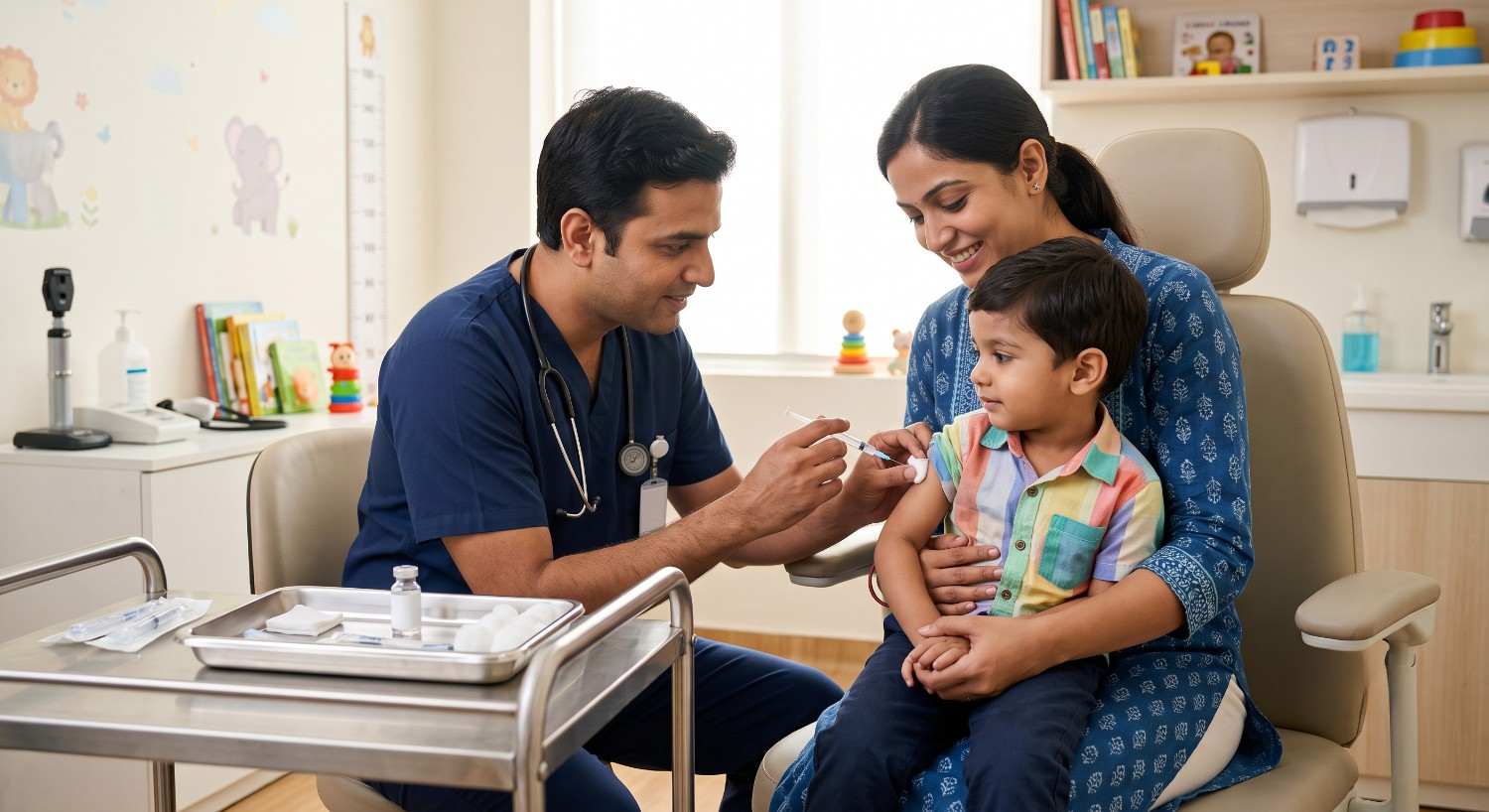
Vaccine administration
The vaccine is given according to the recommended route and site.
Observation when appropriate
The child may be observed for a short period after vaccination, depending on the vaccine and clinical guidance.
Recording the vaccine
The vaccine name, date and any relevant notes are recorded on the vaccination card.
Explaining expected reactions
Parents are informed about common reactions that may occur and what to watch for.
Follow-up guidance
Parents receive guidance on when the next dose is due and when to seek medical advice if needed.

Common Vaccine Side Effects in Children
Mild reactions after vaccination are common and usually settle within a short time. Reactions depend on the specific vaccine and vary between children.
Pain at injection site
Discomfort where the vaccine was given, often mild.
Mild swelling
Some swelling or hardness at the injection site.
Redness
Localised redness around the injection area.
Mild fever
A slight rise in temperature after some vaccines.
Temporary irritability
Some children may be fussier than usual for a short time.
Tiredness
Increased sleepiness or reduced activity for a brief period.
Reduced appetite
A short period of eating less than usual.
These reactions are generally mild and settle within a day or two. Parents should discuss any concerns with their healthcare provider, and should not give medicines to children without appropriate medical guidance.
When Should Parents Seek Medical Attention After Vaccination?
Serious reactions after vaccination are uncommon, but when they occur, prompt medical attention is important.
- Difficulty breathing
- Facial or throat swelling
- Collapse
- Seizure
- Severe allergic-type reaction
- Significant or rapidly worsening symptoms
- Unusual unresponsiveness
These symptoms may have different causes, but they can indicate a situation that requires urgent assessment. Parents should not delay seeking medical care if these signs appear after vaccination.
Can a Child Be Vaccinated When They Have a Cold or Fever?
Whether a child can be vaccinated during a mild illness depends on several factors. These include the severity of the illness, the type of symptoms, the child's overall condition, the vaccine being given and the child's medical history.
Parents should inform the healthcare professional about the child's current illness before vaccination. A pediatrician can assess whether vaccination can proceed or should be scheduled for a later date. There is no single answer that applies to every situation — the decision is made based on the individual child's circumstances.
What If My Child Misses a Vaccine?
A missed vaccination does not automatically mean the entire vaccination series needs to be restarted. However, catch-up vaccination depends on several factors:
The specific vaccine involved
The child's current age
Previous doses already received
Minimum intervals between doses
The child's medical history
Current applicable recommendations
Parents should bring the vaccination card or record to a pediatric consultation. The pediatrician can review what has already been given and determine the appropriate catch-up schedule. Parents should not attempt to create a catch-up schedule themselves without professional guidance.
Can Children Receive Multiple Vaccines During One Visit?
Yes, multiple vaccines may be given during the same visit when recommended. Pediatricians plan vaccine doses so that protection develops at the appropriate ages. Combination vaccines can reduce the number of injections a child receives, and when multiple injections are needed, they are given at different sites.
The exact combination and timing depend on the child's vaccination schedule and clinical guidance. Parents can discuss any concerns about multiple vaccines with their pediatrician.
Vaccination and Children's Immune System
Vaccines work by giving the immune system information it needs to recognise specific infections. The immune system then develops a response, including memory cells that can recognise the infection if the child encounters it later. This process does not require the child to experience the actual disease.
Different vaccines work in different ways. Some contain inactivated components, some contain weakened forms of a virus or bacteria, and some contain parts of an organism. Vaccination reduces the risk of infection and of severe outcomes, but no vaccine provides complete protection in every individual. Parents should discuss any questions about how vaccines work with their pediatrician.
Vaccination for Babies, Toddlers and Older Children
Vaccination continues across childhood, with different vaccines recommended at different stages.
Newborns and Young Infants
Early-life vaccines are given at birth or as soon as possible after birth. These include protection against tuberculosis, polio and hepatitis B.
Older Infants
The primary vaccination series continues with doses at 6, 10 and 14 weeks, covering protection against diphtheria, tetanus, pertussis, polio, Hib disease, hepatitis B, rotavirus and pneumococcal disease.
Toddlers
Additional doses and boosters are given during the toddler period, including MMR, hepatitis A, varicella and booster doses for several vaccines.
Preschool and School-Age Children
Booster doses and additional vaccines may be recommended during the preschool and school-age years to maintain protection.
Adolescents
Vaccines such as HPV and Tdap may be recommended during adolescence according to applicable guidelines.
Vaccination for Children With Special Health Needs
Some children may have vaccination recommendations that differ from the standard schedule. This may be because of chronic medical conditions, immune system conditions, certain medications, prematurity, previous serious reactions or specific risk exposures.
For these children, vaccination decisions are individualised. Parents should discuss their child's specific situation with a pediatrician, who can advise on which vaccines are appropriate and when they should be given.
Keeping Your Child's Vaccination Record Updated
Maintaining an accurate vaccination record helps healthcare professionals determine what has already been given and what may be due next. It also supports continuity of care if the child sees a different healthcare provider.
- Vaccination card
- Dates of previous doses
- Vaccine names where recorded
- Pediatric records
- Relevant medical history
- Information about previous vaccine reactions
Keeping these records together — whether on paper or in a phone — makes it easier to share accurate information during pediatric consultations.
Choosing Vaccination Care in Tirunelveli
Parents in Tirunelveli have access to child vaccination services through hospitals and pediatric clinics that provide immunization, vaccination records and pediatric consultation. When choosing vaccination care, families may consider several practical factors.
Qualified pediatric professionals
Access to pediatric consultation with appropriate clinical training.
Proper vaccine storage and handling
Appropriate storage and handling of vaccines to maintain effectiveness.
Accurate vaccination records
Maintenance of clear records for each vaccine dose given.
Observation after vaccination
Appropriate observation after vaccination when indicated.
Emergency support or referral pathways
Access to urgent care or referral if a reaction occurs.
Clear communication about schedules
Clear guidance on which vaccines are due and when.
Follow-up and catch-up support
Support for missed or delayed doses and follow-up care.
Krishna Hospital offers pediatric services and vaccination support for families in Tirunelveli. Parents can review the hospital's pediatric services or contact the hospital team to discuss their child's vaccination schedule. Parents may also find our articles on newborn baby care during the first 100 days and common childhood illnesses useful for related context.
Common Vaccination Questions Parents Ask
The questions below address some concerns parents commonly raise about childhood vaccination.
"Does a child need multiple vaccines?"
Multiple vaccines may be recommended because different vaccines protect against different infections. The immune system is capable of responding to several vaccines at once, and combination vaccines can reduce the number of injections needed.
"If my child looks healthy, do they still need routine vaccination?"
Yes. Vaccination is preventive — it is given to healthy children to reduce the risk of future illness. A healthy appearance does not mean a child is protected against infections they have not been vaccinated against or previously exposed to.
"What if a vaccine dose is delayed?"
If a dose is delayed, parents should consult a pediatrician about catch-up vaccination. A delayed dose does not necessarily mean the series needs to be restarted — the appropriate next step depends on the vaccine and the child's previous doses.
"Can vaccines cause mild reactions?"
Yes, mild reactions such as soreness at the injection site, mild fever or temporary irritability can occur after some vaccinations. Reactions depend on the specific vaccine and vary between children.
"Does every child follow exactly the same schedule?"
Vaccination recommendations can vary based on the child's age, health history, previous doses and applicable guidelines. Your pediatrician can confirm the schedule that is appropriate for your child.