On This Page
- What Is Newborn Baby Care?
- First 100 Days
- Feeding Your Newborn
- Understanding Newborn Sleep
- Hygiene and Bathing
- Umbilical Cord Care
- Checkups and Vaccinations
- Understanding Jaundice
- Newborn Skin Care
- Understanding Behaviour
- Newborn Development
- Safety at Home
- Warning Signs
- When to Contact a Pediatrician
- Newborn Care in Tirunelveli
- Common Questions
Newborn baby care during the first 100 days focuses on consistent feeding, safe sleep, gentle hygiene, cord care, warmth, and regular checkups with recommended vaccinations. Parents learn to recognise their baby's individual feeding and sleep patterns, monitor nappy output and behaviour, and observe for warning signs that need medical attention. Placing babies on their back on a firm, flat surface for sleep, keeping the sleep area free of loose bedding, and following current safe-sleep guidance supports newborn safety. Newborns can become unwell quickly, so knowing the signs that require prompt medical evaluation — and contacting a pediatrician when concerned — is an important part of newborn care.
- Feed your newborn according to healthcare guidance and the baby's cues.
- Follow safe-sleep practices.
- Keep the baby clean and care for the umbilical cord as advised.
- Attend recommended newborn checkups and vaccinations.
- Observe feeding, urination, activity and general behaviour.
- Know the warning signs that require prompt medical attention.
Introduction
The first 100 days are a period of rapid adaptation for both babies and parents. Newborns are developing their feeding, sleep and temperature-regulation patterns, while parents are learning to recognise what is normal for their baby and watching for signs that may need medical attention.
The goal of newborn care is not perfection. It is consistent feeding, safe sleep, appropriate hygiene, mindful observation, preventive care and knowing when to seek help. This guide walks through the essentials of newborn care in a calm, practical way — from feeding and sleep to cord care, checkups, safety and warning signs.
This article is educational and does not replace individual medical advice. Every baby is different, and your healthcare provider can guide what is appropriate for your newborn. Parents looking for context on the wider family-care pathway may also find our pregnancy care guide for Tirunelveli and the hospital's maternity and pediatric services useful.
What Is Newborn Baby Care?
Newborn baby care is the day-to-day attention and monitoring that supports a baby's health and wellbeing in the first weeks and months of life. It combines practical caregiving with ongoing observation, preventive healthcare and timely medical follow-up.
Newborn care broadly includes:
- Feeding — responding to feeding cues and following healthcare guidance.
- Sleep — safe-sleep practices and understanding newborn sleep patterns.
- Hygiene — gentle cleaning, bathing and diaper-area care.
- Cord care — keeping the umbilical stump clean and dry.
- Skin care — gentle handling of a newborn's sensitive skin.
- Temperature comfort — keeping the baby appropriately warm without overheating.
- Safe sleep — back sleeping on a firm, flat surface, free of loose bedding.
- Routine checkups — scheduled visits to monitor growth, feeding and wellbeing.
- Vaccination — following the recommended immunisation schedule.
- Developmental observation — noting changes in alertness, movement and interaction.
- Parent wellbeing — rest, support and self-care for caregivers.
Parents do not need to master everything at once. Newborn care is learned gradually, and healthcare teams can help clarify what is normal, what to monitor, and when to seek advice.
Newborn Care During the First 100 Days
The first 100 days are often described in stages, though every baby develops at their own pace. The timeline below outlines broad areas parents often focus on during each stage. Healthcare guidance should always be individualised.
Early adjustment
- Feeding support
- Wet / soiled diaper monitoring
- Cord care
- Jaundice observation
- Newborn checkup
- Vaccination according to recommended schedule
Settling into patterns
- Feeding patterns
- Sleep patterns
- Weight monitoring
- Skin and hygiene
- Continued observation
Growth and interaction
- Growth
- Development
- Feeding
- Sleep
- Interaction
Growing alertness
- Growing alertness
- Early developmental changes
- Routine healthcare follow-up
- Continued safe-sleep practices
Every baby develops at their own pace. Your healthcare provider can guide what is appropriate for your baby at each stage.
Feeding Your Newborn
Feeding is one of the most frequent and important parts of newborn care. Newborns feed often, and feeding patterns vary considerably between babies. Responsive feeding — watching for your baby's cues rather than following a rigid schedule — is often recommended.
Common feeding cues may include rooting, hand-to-mouth movements, stirring, or small sounds before crying begins. Crying is often a late feeding cue. Over time, parents learn to recognise their baby's individual patterns.
Breastfeeding
Breastfeeding provides nutrition and immune support for the newborn. Parents often receive guidance from healthcare teams on positioning, latch, and frequency. If breastfeeding is consistently uncomfortable or the baby seems unsettled after feeds, discussing it with a healthcare professional can help.
Formula Feeding
When formula feeding is recommended or chosen, safe preparation and storage are important. Following the guidance on the formula packaging and any advice from your healthcare provider helps ensure the baby receives appropriate nutrition safely.
Signs That May Suggest Adequate Feeding
- Regular wet nappies through the day
- Settled behaviour after feeds
- Steady weight gain as assessed at checkups
- Alert periods during wakeful times
If feeding is consistently difficult, your baby seems unusually unsettled after feeds, or weight gain is a concern, speak with your healthcare provider. They can assess and guide what is appropriate for your baby. Parents can also find related context in our article on your newborn's first month.
Understanding Newborn Sleep
Newborns sleep for much of the day and night in short stretches, waking frequently to feed. Sleep patterns are often irregular at first, and the day-night rhythm develops gradually over the first few months. Frequent waking for feeds is normal for many newborns.
Understanding that newborn sleep is different from adult sleep — shorter cycles, more frequent waking, and no fixed schedule — can help parents approach rest realistically in the early weeks.
- Place baby on their back for sleep
- Use a firm, flat sleep surface
- Keep the sleep area free of loose pillows, blankets and soft objects
- Avoid unsafe sleep environments
- Follow current safe-sleep guidance from qualified health authorities
Newborn Hygiene and Bathing
Newborn skin and hygiene care is generally simple and gentle. The aim is to keep the baby clean and comfortable without unnecessary products or vigorous cleaning.
- Gentle cleaning of the face, hands and diaper area using plain water or as advised.
- Diaper changes as needed to keep the area clean and dry.
- Careful cleaning of skin folds where moisture can collect.
- Bathing with attention to safety — supporting the head, using warm water, and never leaving the baby unattended.
- Hand hygiene for caregivers before handling the baby.
- Avoiding unnecessary products, especially perfumed or harsh ones.
Keep a small towel or soft cloth nearby during bath time so you can dry the baby gently and keep them warm right after. A warm, draft-free room makes bath time more comfortable for both of you.
Umbilical Cord Care
The umbilical cord stump is usually kept clean and dry and allowed to separate naturally. Following the guidance provided by your healthcare team helps the area heal without unnecessary interference.
- Keep the area clean and dry according to professional guidance.
- Allow the cord stump to separate naturally.
- Avoid applying unprescribed substances.
- Observe for signs of infection.
- Increasing redness
- Swelling
- Pus or discharge
- Persistent bleeding
- Foul smell
- Fever or baby appearing unwell
Newborn Checkups and Vaccinations
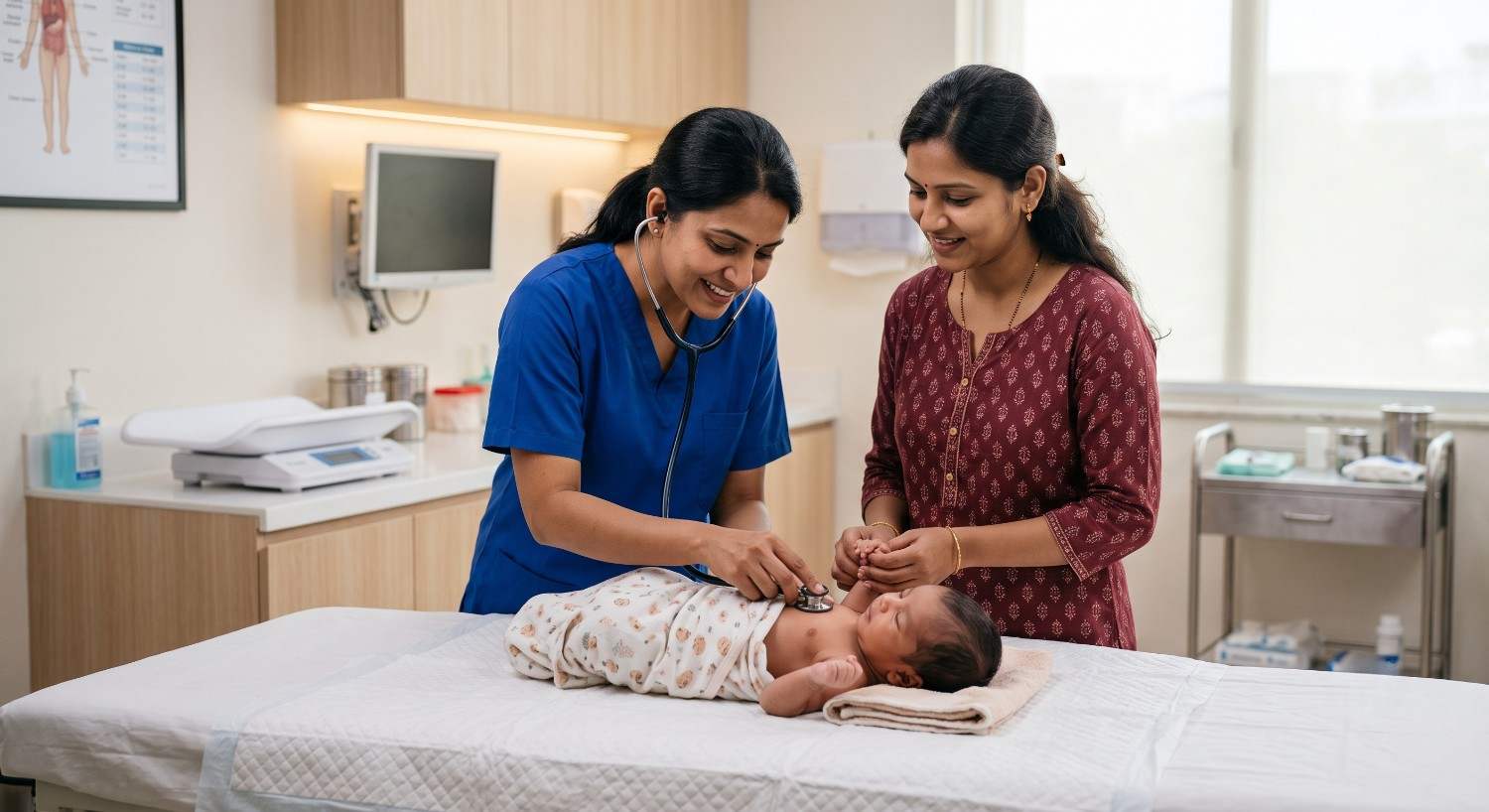
Routine newborn follow-up is an important part of care in the first weeks and months. These visits allow the healthcare team to monitor the baby's weight, feeding, growth and development, and to address any questions parents may have.
What Newborn Checkups Typically Include
- Weight and growth assessment
- Feeding review and support
- Physical examination
- Developmental observation
- Discussion of parent concerns
- Vaccinations according to the recommended schedule
Vaccinations should follow the schedule recommended by your healthcare provider and applicable national guidance. The specific vaccines and timing are best confirmed with your care team.
Understanding Newborn Jaundice
Jaundice is common in newborns. It typically appears as a yellowish colour of the skin or eyes and usually develops in the first few days after birth. Some cases are mild and settle without intervention, while others may require medical evaluation and monitoring.
Because jaundice can sometimes become more pronounced or be associated with other concerns, monitoring during the newborn period is important. Parents should contact a healthcare professional if they notice:
- Yellowing appearing very early after birth
- Yellowing becoming more pronounced
- The baby being difficult to wake
- Poor feeding
- The baby appearing unwell
- Any other concerning symptoms
Only a healthcare professional can assess jaundice appropriately. Parents should not attempt to diagnose or treat jaundice at home.
Newborn Skin Care
Newborn skin can be sensitive and may show various changes in the first weeks. Gentle, minimal care is often all that is needed.
- Keep the skin clean and dry using gentle cleaning.
- Avoid unnecessary products, especially those with fragrances or harsh ingredients.
- Change nappies regularly to keep the diaper area dry.
- Allow the skin to air when practical.
- Seek medical advice if a rash is persistent, spreading or associated with other symptoms.
Understanding Your Newborn's Behaviour
Newborn behaviour can seem unpredictable at first, but many patterns are typical for this age. Common behaviours include:
- Crying, which is a newborn's primary way of communicating needs
- Startle reflex — a brief reaction to sound or movement
- Frequent feeding through the day and night
- Sleeping frequently in short stretches
- Brief periods of alertness
- Gradually increasing interaction and eye contact over time
Parents learn their baby's individual patterns over time. If a pattern seems unusual for your baby or you are worried about behaviour, speaking with a pediatrician can help.
Newborn Development During the First 100 Days
Development during the first 100 days happens at each baby's own pace. Below are broad examples of what parents may notice across these months. These are general patterns, not strict milestones.
Early weeks
- Brief alert periods
- Responding to sound
- Reflexive movements
Emerging interaction
- Increasing alertness
- More eye contact
- Emerging social interaction
Growing responsiveness
- Greater interaction
- More purposeful movements
- Increasing responsiveness
Babies develop at different rates. If a parent has concerns about their baby's development, discussing them with a pediatric healthcare provider is appropriate.
Newborn Safety at Home
Safety awareness is an important part of newborn care. The following checklist covers key practical areas parents often find useful.
- Safe sleeping environment — back sleeping on a firm, flat surface, free of loose bedding.
- Safe handling — supporting the head and neck when lifting or holding.
- Never shake a baby — even in frustration. Seek support if caregiving feels overwhelming.
- Safe bathing — never leaving the baby unattended in or near water.
- Smoke-free environment — keeping the baby away from tobacco smoke.
- Avoiding unattended situations — especially on elevated surfaces.
- Safe transport — using an appropriate infant car seat for travel.
- Keeping small objects away — from reach of the baby and older siblings.
Warning Signs in a Newborn
Newborns can become unwell quickly, and certain symptoms deserve prompt medical assessment. This section is not meant to alarm, but to help parents recognise when to seek help early.
- Difficulty breathing
- Blue or grey colour
- Fever or unusually low temperature
- Poor feeding
- Repeated vomiting
- Markedly reduced urine output
- Extreme sleepiness or difficulty waking
- Seizure-like activity
- Significant worsening jaundice
- Unusual persistent crying
- Baby appearing seriously unwell
These signs can have different causes, but they may require prompt medical evaluation. They do not automatically indicate a particular diagnosis. For emergency symptoms, seek urgent emergency medical care.
When Should Parents Contact a Pediatrician?
Parents can seek medical advice whenever they are concerned about their baby. There is no need to wait until a problem becomes severe before discussing a concern with a healthcare professional.
Common areas where parents may want to seek guidance include:
- Feeding
- Weight gain
- Sleep
- Jaundice
- Skin changes
- Fever
- Breathing
- Vomiting
- Stool or urine changes
- Development
- Behaviour
Contacting a pediatrician early often provides reassurance and, where needed, timely guidance.
Choosing Newborn Care in Tirunelveli
Parents in Tirunelveli often consider several practical factors when choosing newborn and pediatric care. The right choice depends on individual circumstances, family preferences and the baby's needs.
Pediatric expertise
Access to qualified pediatric care for newborn assessment and follow-up.
Newborn assessment
Availability of newborn examination and monitoring in the early days.
Routine follow-up
Scheduled newborn checkups for growth, feeding and development review.
Vaccination support
Access to immunisation according to the recommended schedule.
Growth monitoring
Regular tracking of weight and growth through the early months.
Feeding guidance
Support with breastfeeding, formula feeding and feeding concerns.
Emergency access
Clarity on how to reach urgent pediatric care when needed.
Continuity and communication
How clearly the team communicates and whether care feels coordinated.
Parents often find it helpful to visit the facility or speak with the care team before deciding. This provides an opportunity to ask about available services, understand how newborn checkups are structured, and clarify how emergency concerns are handled. Krishna Hospital's pediatric services provide one option for families in Tirunelveli, and enquiries about the care pathway are welcome through the hospital contact page.