On This Page
- Common Childhood Illnesses
- When to See a Pediatrician
- Emergency Warning Signs
- Monitoring a Sick Child
- When Home Care May Be Reasonable
- Why Children May Need Evaluation
- How a Pediatrician Evaluates
- Parent Guide (Table)
- Children Who May Need Earlier Care
- Common Mistakes
- Preparing for a Visit
- Pediatric Care in Tirunelveli
- FAQs
Many childhood illnesses are mild and improve with supportive care. Parents should consider contacting a pediatrician when symptoms are persistent, worsening, unusual for the child, or affecting hydration, breathing, feeding, activity or sleep. Symptoms such as significant difficulty breathing, severe dehydration, seizures, unusual unresponsiveness, or blue or grey lips or skin require urgent medical attention. Very young infants may need earlier assessment for certain symptoms such as fever. The decision to seek care depends on the child's age, underlying conditions, symptom severity and overall behaviour — not on any single symptom alone.
- Common childhood illnesses include respiratory infections, fever, stomach illnesses, ear infections and some rashes.
- Not every fever or cough requires an emergency visit.
- A child's breathing, hydration, alertness and overall behaviour are important indicators.
- Persistent or worsening symptoms should be discussed with a pediatrician.
- Babies and children with underlying health conditions may require earlier medical assessment.
- Some warning signs require urgent medical care.
- Parents should avoid giving medicines to children without appropriate medical guidance.
- When uncertain, contacting a pediatric professional can help determine the next step.
Introduction
Childhood illnesses are a normal part of growing up. Most children will experience colds, fevers, stomach upsets and minor rashes at some point, and many of these episodes settle with time, rest and supportive care at home.
For parents, the challenge is often not recognising that a child is unwell — it is deciding how unwell. A mild cough and a low-grade fever may simply need observation. The same symptoms in a very young infant, or in a child who is not drinking, unusually drowsy or breathing differently, may need a pediatric review. Distinguishing between these situations is not always obvious, and there is no single rule that fits every child.
This guide is written for parents who want to understand the most common childhood illnesses, the symptoms that usually warrant a pediatric consultation, the signs that require urgent medical attention, and how to monitor a sick child at home while staying alert to changes. It is educational and does not replace individual medical advice. Every child is different, and a pediatric professional can assess your child's specific situation.
Parents looking for broader context may also find our guides on newborn baby care during the first 100 days and pregnancy care in Tirunelveli useful, as these cover the earlier stages of the family health journey.
What Are the Most Common Childhood Illnesses?
Childhood illnesses generally fall into a few broad categories: respiratory infections, fevers, gastrointestinal illnesses, ear and throat infections, and rashes. Below are the most common, along with the symptoms parents typically notice.
Common Colds and Viral Respiratory Infections
Colds are among the most frequent childhood illnesses. They are usually caused by viral infections and often resolve without specific treatment.
Common symptoms include:
- Runny nose
- Nasal congestion
- Cough
- Mild fever
- Sore throat
- Reduced appetite
Many viral respiratory illnesses are self-limited, meaning they improve over time with supportive care. However, symptoms that worsen, persist, or begin to affect breathing, feeding or activity may warrant a pediatric assessment.
Fever in Children
Fever is a symptom rather than a disease itself. It is a normal response of the body to infection and can occur with many childhood illnesses.
Temperature should be interpreted in the context of the child's age, overall condition and behaviour. Persistent, unusually high, or concerning fever — especially in a child who appears unwell — may require medical assessment. Fever in very young infants, particularly those under three months, can require prompt medical evaluation even when the child does not appear seriously unwell.
Parents should focus not only on the temperature reading but on how the child looks, behaves, feeds and responds. A child with a low-grade fever who is alert, drinking and comfortable may need different attention than a child with the same temperature who is drowsy, refusing fluids or breathing differently.
Cough and Breathing Problems
Cough is common in childhood and is often a normal response to irritation or infection in the airways. It can range from a mild, occasional cough to a persistent or distressing one.
Parents should pay attention to:
- How long the cough has lasted
- Whether it is worsening or improving
- Whether the child is wheezing or making a noisy sound while breathing
- Whether breathing looks fast or difficult
- Whether there is any chest retraction (skin pulling in around the ribs or neck)
- Whether the child can feed, speak or sleep normally
Breathing symptoms that suggest difficulty — rapid breathing, retractions, or a child who appears to be working hard to breathe — should prompt urgent medical attention.
Vomiting and Diarrhea
Vomiting and loose stools are common in childhood and are often caused by viral stomach infections. Many episodes settle within a few days with supportive care.
The most important concern during vomiting or diarrhoea is dehydration. Signs that may suggest dehydration include:
- Reduced urination
- Dry mouth
- No tears when crying
- Unusual sleepiness
- Sunken eyes
- Difficulty keeping fluids down
Parents should not attempt a specific treatment plan without professional guidance. If a child is unable to keep fluids down, shows dehydration signs, has blood in vomit or stool, or appears unusually unwell, medical evaluation is advisable.
Ear Pain and Ear Infections
Ear pain is common in young children and may be associated with an ear infection, often following a cold. Symptoms parents may notice include:
- Ear pain
- Irritability
- Trouble sleeping
- Fever
- Pulling or rubbing the ear in younger children
- Reduced response to sound in some cases
Persistent ear pain, fever with ear pain, discharge from the ear, or a child who appears very unwell should prompt pediatric evaluation. Younger children may not be able to describe ear pain clearly, so changes in behaviour may be the main clue.
Sore Throat and Tonsil Problems
Sore throat is common and can occur with viral illnesses, and sometimes with bacterial infections. Parents may notice:
- Pain when swallowing
- Difficulty swallowing
- Fever
- Enlarged or red tonsils
- Voice changes
Some throat infections may require medical evaluation, particularly if the child has difficulty swallowing, is drooling, appears very unwell or has a persistent high fever. Parents should not self-prescribe antibiotics. If antibiotics are needed, they should only be given when prescribed by a qualified healthcare professional.
Childhood Rashes
Rashes in children can have many causes, including viral illnesses, allergic reactions, skin irritation and other conditions. Most are harmless and settle on their own, but some rashes require medical attention.
Features that may warrant prompt evaluation include:
- A rash that spreads rapidly
- A rash associated with a child who appears seriously unwell
- A rash with breathing difficulty or facial swelling
- A rash that does not fade when pressed (a non-blanching rash)
- A rash that is unexplained or worsening despite home care
When Should Parents See a Pediatrician?
Many childhood illnesses can be managed with supportive care at home. However, there are situations where a pediatric consultation can be helpful — sometimes to confirm that the child is on the right track, and sometimes to reassess a concern that is not resolving.
- Symptoms are getting worse rather than improving
- Fever persists or repeatedly returns
- The child is unusually tired or irritable
- The child is not drinking enough
- Urination decreases
- Vomiting prevents adequate fluid intake
- Diarrhoea continues or becomes concerning
- Cough persists or affects sleep and activity
- Ear pain continues
- A rash is unexplained or worsening
- The child has repeated episodes of illness
- Parents are concerned about the child's behaviour or recovery
- The child has an underlying medical condition
- The child is very young and develops concerning symptoms
The exact decision depends on the child's age, symptoms, medical history and overall condition. When parents are uncertain, a pediatric consultation can help clarify what needs attention and what can be safely monitored.
When Is a Child's Illness an Emergency?
Most childhood illnesses are not emergencies. However, some signs indicate that a child needs urgent medical evaluation. These should not be managed at home, and parents should seek emergency medical care without delay.
- Significant difficulty breathing
- Blue, grey or unusually pale lips or skin
- Severe dehydration
- Seizure
- Loss of consciousness
- Extreme difficulty waking or unusual unresponsiveness
- Severe allergic reaction with breathing difficulty or swelling
- Severe or rapidly worsening symptoms
- Serious injury
- Any symptom that makes the child appear acutely very unwell
These symptoms may have different causes, but they can indicate a situation that requires urgent assessment. When in doubt, seek emergency medical care rather than waiting.
It is useful for parents to distinguish clearly between two different pathways:
- Pediatrician consultation — for persistent, worsening or concerning but non-emergency symptoms. This is typically a scheduled or same-day visit.
- Urgent or emergency medical care — for the warning signs listed above, or for any situation where the child appears seriously unwell.
How Can Parents Monitor a Sick Child at Home?
Home monitoring does not replace medical evaluation, but it can help parents track how a child is doing, recognise changes early, and provide useful information during a pediatric consultation.
Temperature
Note readings and how the child behaves at those temperatures.
Breathing
Watch for fast breathing, effort, noisy sounds or retractions.
Fluid intake
Track how much the child is drinking through the day.
Urination
Note frequency — a reduction may suggest dehydration.
Appetite
Some reduction is common; a marked change is worth noting.
Activity
Note energy levels, alertness and willingness to play.
Sleep
Notice unusual drowsiness or difficulty waking.
Pain
Observe where and how much pain the child seems to have.
Behaviour changes
Any change from the child's usual behaviour is worth noting.
Monitoring helps parents communicate clearly with a pediatrician and decide when a concern has crossed the threshold from "watch" to "seek advice". Parents should not give medicines to children without appropriate medical guidance.
When Is Home Care Reasonable?
Some mild childhood illnesses can often be monitored at home. This is not a diagnosis — it is a general observation that applies when the child appears to be coping well and is improving.
- Is alert and responsive
- Is breathing comfortably
- Is drinking adequately
- Is urinating normally
- Has mild symptoms
- Is gradually improving
This is general educational guidance and not a diagnosis. If parents are uncertain or the child's condition changes, medical consultation is appropriate.
Why Children May Need Pediatric Evaluation
Pediatric assessment is designed for children — their bodies, symptoms and needs differ from adults. A pediatrician can evaluate a child in ways that consider age, growth, development and family context.
Pediatric evaluation can be useful for:
- Age-specific assessment
- Growth and development monitoring
- Hydration status
- Respiratory assessment
- Infection evaluation
- Medication safety
- Underlying health conditions
- Recurrent illnesses
- Follow-up when symptoms do not improve
Parents sometimes find it helpful to think of a pediatric consultation as a way of answering the question, "Is my child on a safe path, or does something need to change?" That reassurance — or a clear next step — is often as valuable as any treatment.
How Does a Pediatrician Evaluate a Sick Child?
When a child is brought to a pediatric consultation, the assessment usually follows a structured approach. Not every child needs every step — the exact evaluation depends on the symptoms and clinical judgement.
Medical history
The pediatrician asks about the child's general health, past illnesses, allergies, medications and family history.
Symptom timeline
When symptoms started, how they have progressed, and what has been tried at home.
Temperature and vital signs
Measurement of temperature and other basic observations appropriate to age.
Physical examination
A focused examination that may include the throat, ears, chest, abdomen and skin.
Hydration assessment
Review of fluid intake, urination and clinical signs that may indicate dehydration.
Respiratory assessment
Listening to the chest, observing breathing effort and checking oxygen levels where indicated.
Additional tests when clinically appropriate
Some children may need blood tests, urine tests, imaging or other investigations. Not every child requires these.
Treatment or supportive-care recommendations
Based on the assessment, the pediatrician may recommend observation, supportive care, medication or further review.
Follow-up instructions
Clear guidance on what to watch for, when to return, and how to reach help if symptoms change.
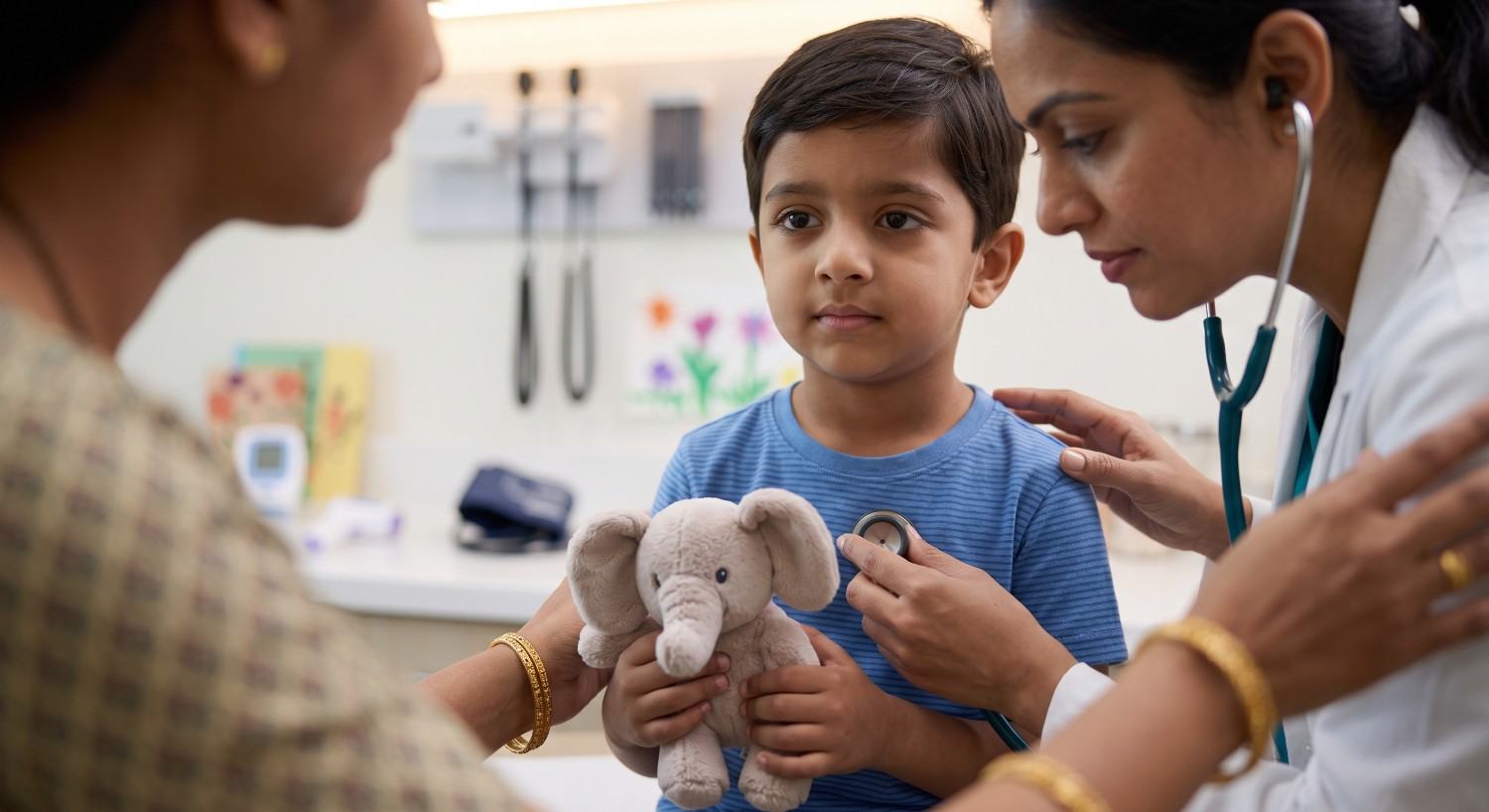
Common Childhood Illnesses: A Simple Parent Guide
The table below summarises common symptoms and the general situations in which pediatric review may be appropriate. It is a guide only — the decision to seek care depends on the child's age, overall condition and how the illness progresses.
| Illness / Symptom | Common Features | When to Consider Pediatric Review |
|---|---|---|
| Common cold | Runny nose, congestion, cough | Symptoms worsen, persist or affect breathing |
| Fever | Raised temperature, tiredness | Persistent or concerning fever, or child appears unwell |
| Vomiting | Nausea, vomiting, reduced intake | Unable to keep fluids down or dehydration signs |
| Diarrhea | Loose stools | Dehydration, blood in stool, or worsening symptoms |
| Ear pain | Pain, irritability, fever | Persistent pain, discharge or concerning symptoms |
| Sore throat | Pain swallowing, fever | Severe symptoms or difficulty swallowing |
| Rash | Redness, spots, itching | Rapid spread, serious illness or allergic warning signs |
| Cough / wheezing | Cough, noisy breathing | Breathing difficulty or worsening symptoms |
This table is a general educational overview only. The specific decision for any individual child depends on clinical judgement and the child's circumstances.
Children Who May Need Earlier Medical Attention
Some children may require a lower threshold for medical evaluation because their bodies have less reserve or are more vulnerable to certain infections. This is not a reason for alarm — it is a reason for parents to be more attentive.
Very young infants
Newborns and young infants can become unwell quickly and may need earlier assessment.
Children born prematurely
Premature babies may have less reserve and benefit from earlier review.
Children with chronic conditions
Chronic heart, lung, kidney or other conditions may lower the threshold for review.
Immune system conditions
Children with immune system concerns may need earlier attention for common infections.
Developmental or neurological conditions
Significant developmental or neurological conditions may affect how illness is assessed.
Previous serious illnesses
A history of serious illness may mean a lower threshold for reassessment.
Children on certain medicines
Some medicines affect immunity or other body functions and may alter the approach to illness.
When in doubt
Parents who feel something is different about their child should feel comfortable seeking advice.
Parents should not assume that any individual child falls into these groups without clinical guidance. If a child has a known condition, the treating team can advise on what to watch for and when to seek care.
Common Mistakes Parents Should Avoid
Most parents do a great deal right when caring for a sick child. Being aware of common pitfalls can help avoid complications and reduce the risk of delaying appropriate care.
- Giving antibiotics without medical advice
- Using leftover prescription medicines
- Giving medicines intended for another child
- Ignoring breathing difficulty
- Ignoring dehydration signs
- Delaying evaluation because a symptom "looks like a common cold"
- Focusing only on temperature instead of the child's overall condition
- Following unverified medical advice from social media
These points are educational rather than judgemental. Parents often make decisions with the best information available at the time, and a pediatrician can help clarify what is appropriate for an individual child.
How Parents Can Prepare for a Pediatric Visit
A little preparation can make a pediatric visit more productive and help the healthcare professional understand the situation clearly. Parents may find it useful to bring:
- Child's age
- Main symptoms
- When symptoms started
- Temperature readings if available
- Fluid intake
- Urination
- Medicines already given
- Allergies
- Previous medical conditions
- Recent exposure to illness, when relevant
- Any change in behaviour, sleep or activity
Notes do not need to be formal — even a short list on a phone can help. Clear information supports clearer clinical decisions and reduces the chance that important details are missed.
Pediatric Care in Tirunelveli
Parents in Tirunelveli have access to pediatric services through hospitals and clinics that provide child health consultations, assessment, vaccination and follow-up for childhood illnesses. When choosing pediatric care, families may consider several practical factors.
Qualified pediatric professionals
Access to pediatric consultation with appropriate clinical training.
Child-focused facilities
Facilities designed for children, with attention to comfort and clarity.
Emergency support
Clarity on how to reach urgent pediatric care when needed.
Follow-up availability
Consistent follow-up for childhood illnesses and preventive care.
Clear communication
How clearly the team communicates with parents and caregivers.
Appropriate referral pathways
Access to specialist or hospital care when clinically required.
Parents often find it helpful to visit the facility or speak with the care team before deciding. This provides an opportunity to ask about available services, understand how pediatric consultations are structured, and clarify how urgent concerns are handled. Krishna Hospital's pediatric services provide one option for families in Tirunelveli, and enquiries about the care pathway are welcome through the hospital contact page.
For context on related stages of family care, parents may also find our articles on newborn baby care during the first 100 days and a rare neonatal clinical case useful.